Sectional removal and rigging
When space is tight, we take the tree down piece by piece, lowering limbs and trunk sections to protect siding, roofs, and landscaping.
Serving Pittsburgh, Pennsylvania & surrounding areas
Mon–Fri 8am–6pm · Sat 9am–2pm
Pittsburgh tree removal service
When a tree becomes a safety risk, you need a plan that protects your home, your neighbors, and nearby lines. Our Pittsburgh crew handles removal, rigging, cleanup, and hauling with a clear written scope before work starts.
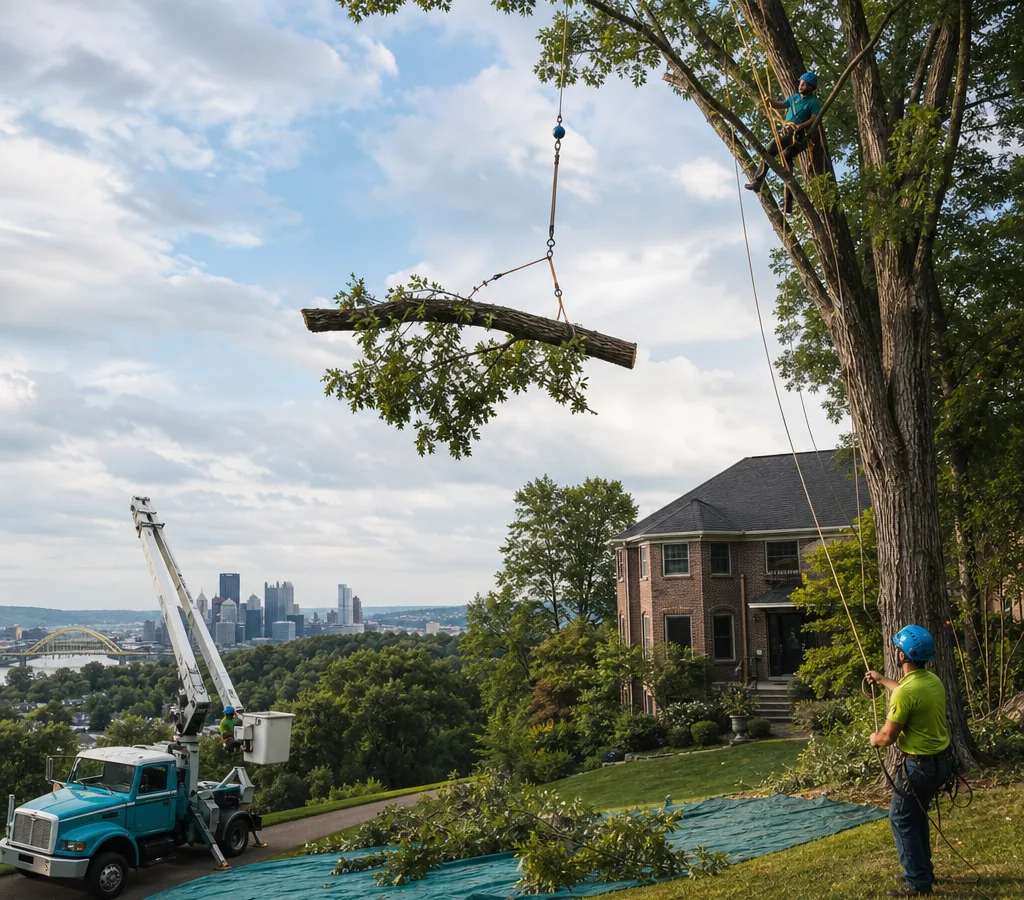
Property hazard assessment
If you are searching for tree removal Pittsburgh PA, you are usually dealing with one of two situations: a tree is already damaged by wind, heavy snow, or saturated soil, or it is showing signs that it may fail soon, such as leaning, a dead canopy, cracked unions, or heaving roots. Either way, removal needs to be planned around what is at risk: roofs and siding, fences, parked cars, and the people who live nearby.
Pittsburgh properties add real constraints. Steep grades, narrow backyards, and homes built close together often mean a tree cannot be felled in one piece. That is when sectional dismantling, rigging, and careful lowering matter. We look at access for equipment, identify a safe drop zone, and choose the method that fits the site, not the other way around.
Hyrdoseeding PA provides tree removal in Pittsburgh, PA with the practical details handled start to finish: hazard assessment, safe removal, debris cleanup, and hauling. You get a straightforward scope of work and a clear plan for how the tree comes down.
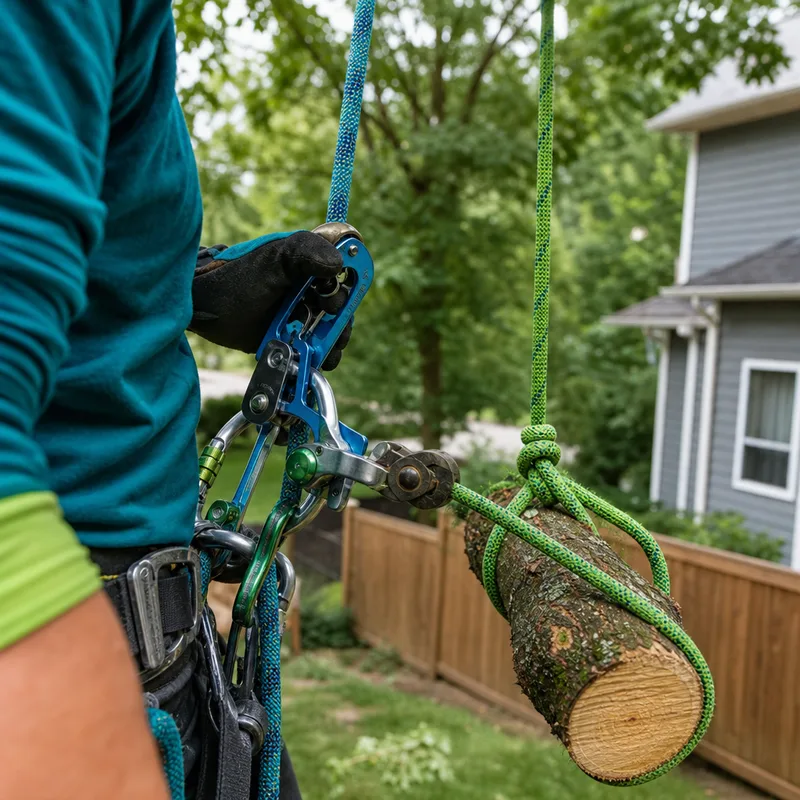
Removal planning
A good removal starts with the hazards, not the saw. Before any cutting, we walk the tree and the surroundings and call out the constraints that drive the plan.
Typical planning items include:
For many properties, the safest approach is to dismantle the tree in sections and lower pieces by rope. If there is room, we may be able to drop larger sections into a planned landing zone. Either way, the goal is the same: controlled cuts, controlled movement, and a clean jobsite when we are done.
Included removal work
When space is tight, we take the tree down piece by piece, lowering limbs and trunk sections to protect siding, roofs, and landscaping.
If a tree is split, hanging, or partially down, we prioritize stabilizing the situation and removing the dangerous material safely.
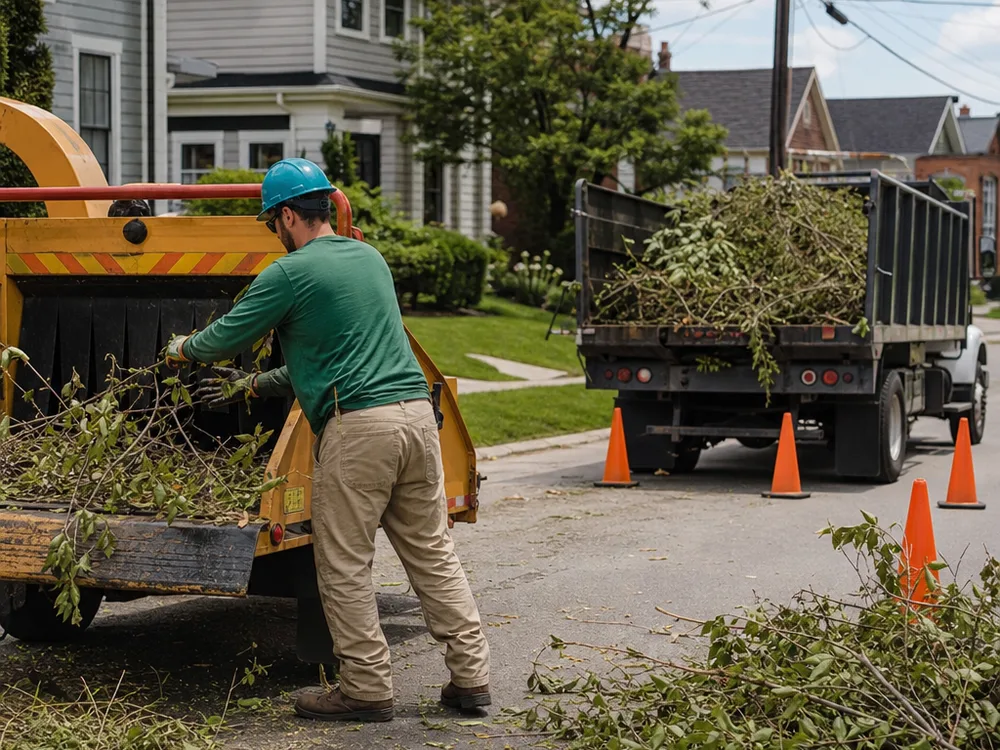
Brush, limbs, and wood are gathered and removed so you are not left with a pile to deal with after the work.
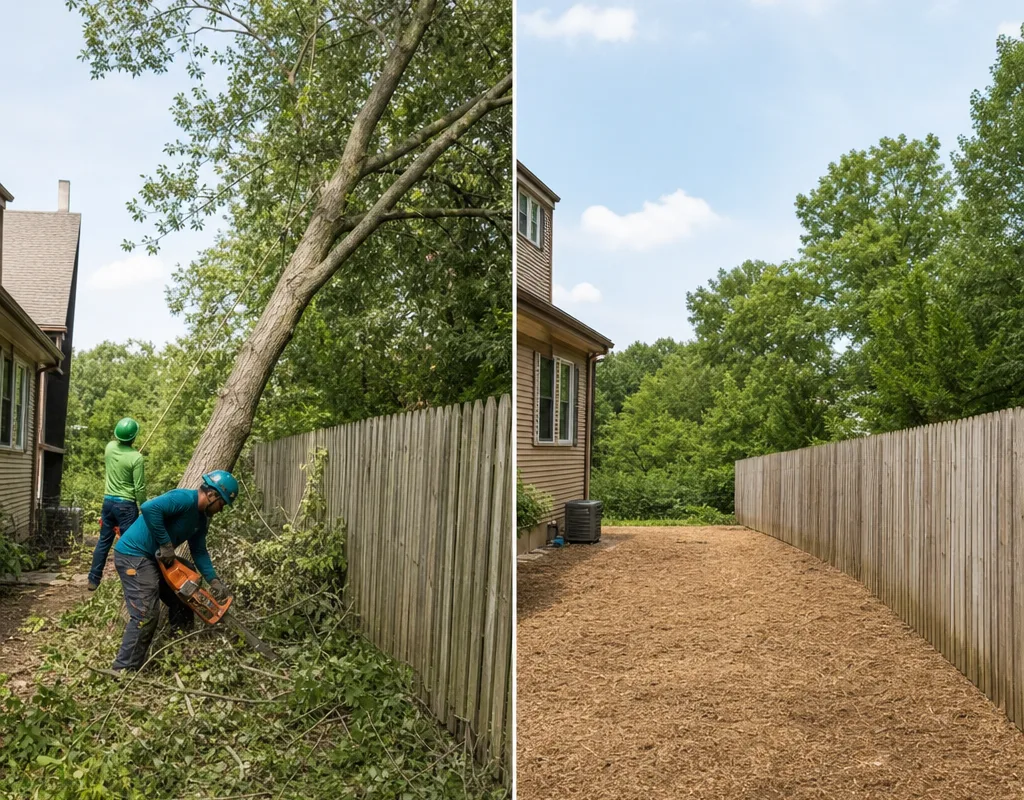
We plan around narrow alleys, fenced yards, and steep grades common around Pittsburgh homes so the removal stays controlled.
We set drop zones, use lowering lines when needed, and keep the work area organized to reduce damage risk during removal.
Property-specific pricing
Tree removal in Pittsburgh typically ranges from about $450 to $2,500+ depending on size and complexity. Small trees with easy access are often at the lower end, while large trees, tight clearances, and sectional rigging can push pricing higher.
Final cost is driven by height and trunk diameter, tree condition such as dead or storm-damaged material, proximity to structures or overhead lines, access for equipment, and how much hauling and cleanup is needed. The exact price is confirmed after an on-site look at the tree and the work area.
Removal process
We inspect the tree, note hazards and access limits, and outline the removal method—directional felling where possible, or sectional dismantling with rigging.
We establish the work zone, plan the drop area, and stage ropes and tools so the work stays controlled and the yard stays as protected as possible.
We remove limbs and trunk sections in a sequence that matches the plan, adjusting as needed for tree condition and surrounding targets.
Brush and wood are gathered, loaded, and removed. We finish with a jobsite check so you know what was done and what is left behind.
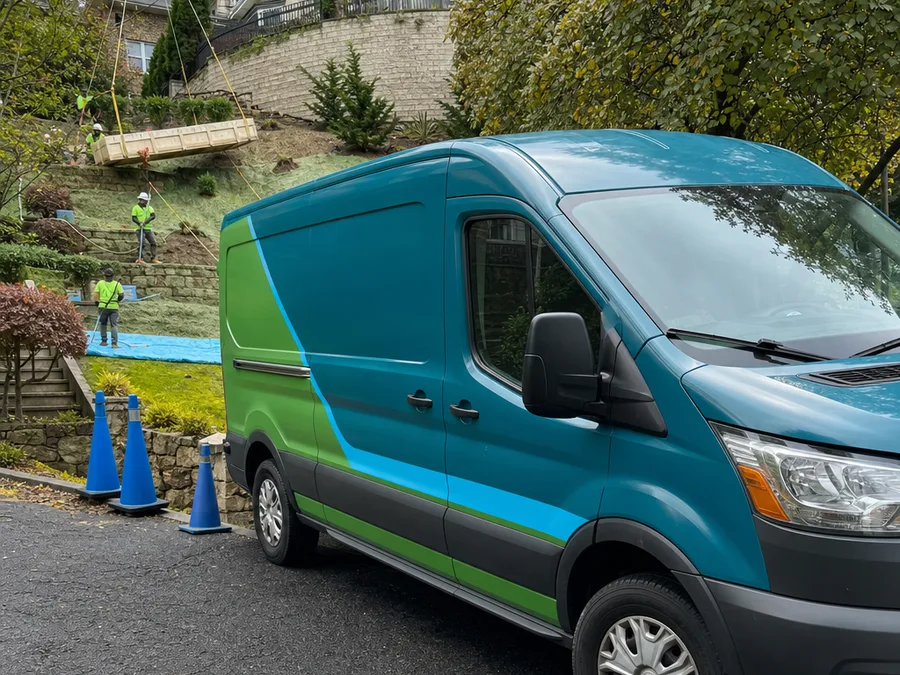
Removal work examples
Common questions
Yes. When a tree is close to a structure, the typical approach is sectional dismantling: limbs and trunk sections are cut in smaller pieces and lowered with rigging when needed so impact is controlled. At the site visit we identify targets such as rooflines, siding, decks, and fences, then choose a method that fits the clearance and access.
Yes, but storm damage is treated as a hazard job and the plan depends on what is under tension or partially supported. A split trunk, hung-up limb, or partially down tree can shift suddenly, so we set the work zone, stabilize what we can, and dismantle in a safer sequence rather than trying to force a quick drop.
The biggest cost drivers are tree size, proximity to structures or overhead lines, and whether the removal can be dropped in one direction or must be rigged down in sections. Access also matters a lot in Pittsburgh because steep lots, fences, and narrow side yards can increase labor and time for cleanup and hauling.
Many straightforward removals can be completed in a single visit, while large trees or tight-clearance jobs can take longer because the tree is dismantled in smaller pieces. The timeline depends on the removal method, how far debris must be carried, and whether the work area needs special protection or staging.
Yes, hauling and cleanup can be included so you are not left with brush piles or heavy rounds. During the estimate we confirm what debris is being removed and what, if anything, you want left on-site.
Sometimes. Requirements can vary based on the municipality, whether the tree is in a right-of-way, and whether there are local protections that apply. If the tree is near the street or you are unsure about ownership lines, we recommend confirming jurisdiction details before scheduling removal so there are no last-minute delays.
Free property inspection
Tell us what is going on with the tree and what it is close to—home, garage, lines, or fence. We will review access, explain the safest removal approach, and provide a clear written scope for the work.