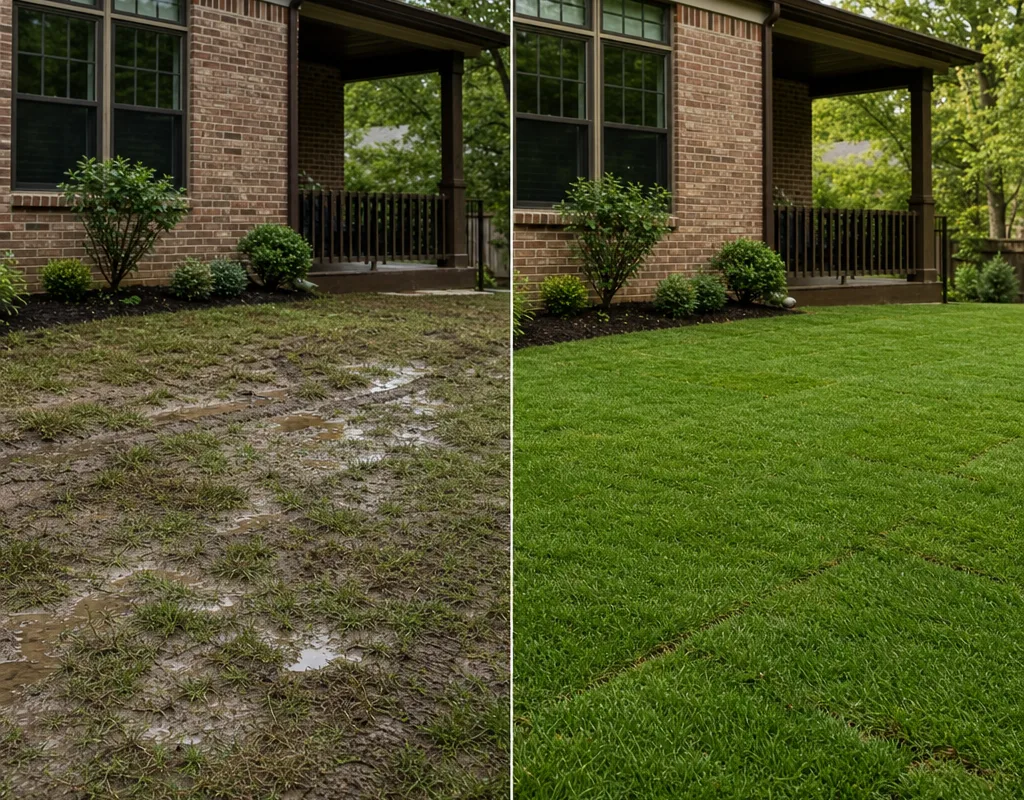
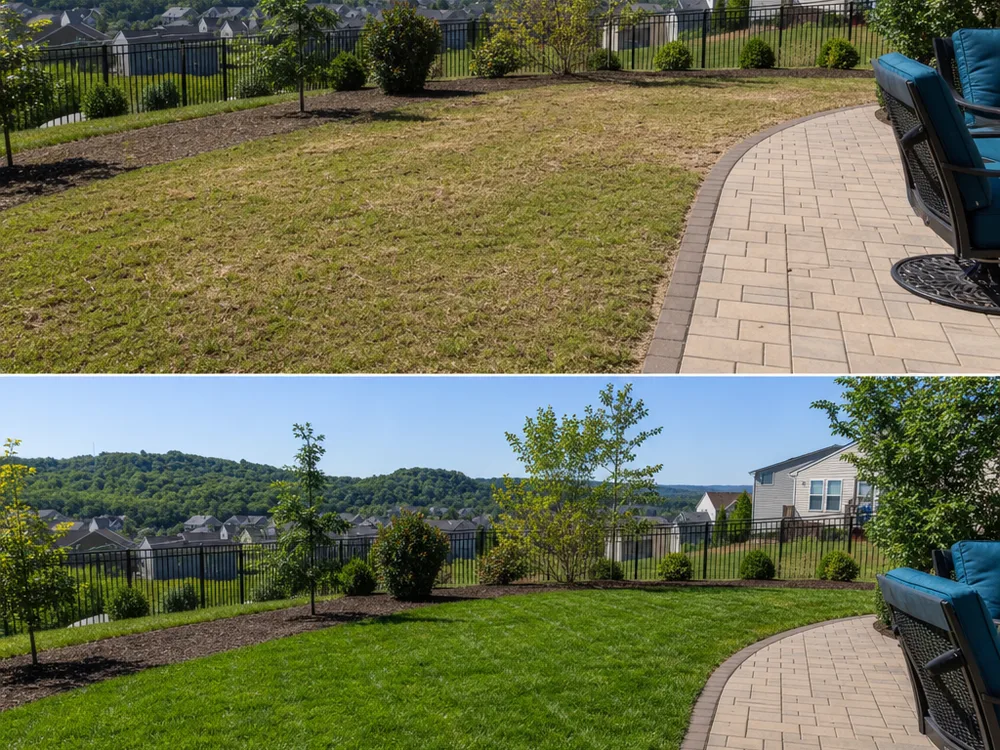
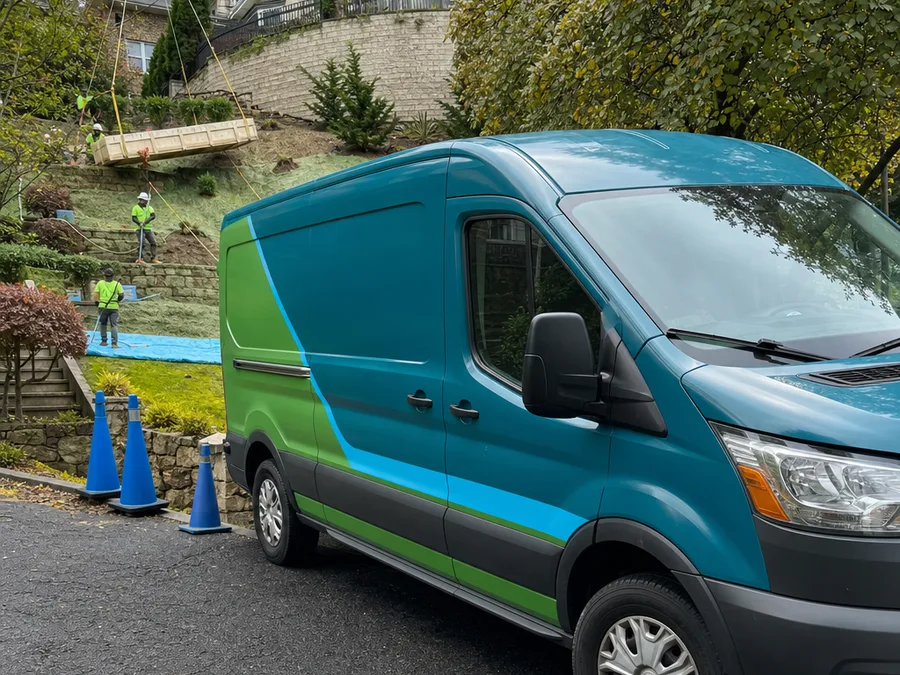
Immediate coverage
Sod gives you a finished look right away, which is helpful for new construction, renovations, or homes going on the market.
Serving Pittsburgh, Pennsylvania & surrounding areas
Mon–Fri 8am–6pm · Sat 9am–2pm
Pittsburgh sod installation
Get an instant, even lawn without waiting on seed. We handle grading, soil prep, and tight seams so your new turf roots in clean and looks great fast.
Property conditions & outcome
If you are searching for sod in Pittsburgh, you are usually trying to solve one of two problems: you need grass quickly, or you are tired of thin patches that never fill in. Sod is a practical fix for both because it arrives as mature turf and gives you immediate coverage.
A good sod job is mostly about what happens before the first roll goes down. The lawn has to drain correctly, the base has to be smooth and firm, and the final grade has to send water away from the house without creating low spots that turn into mud. In Pittsburgh, those details matter because yards often include slopes, compacted soils from construction traffic, and shaded areas near mature trees.
Hyrdoseeding PA installs sod with a site-prep-first approach: we look at grade, sun, irrigation options, and how the area is used—kids, pets, and heavy foot traffic. Then we build the base, install the turf, and give you a clear care plan for the first few weeks so it roots in evenly.
Preparation & installation
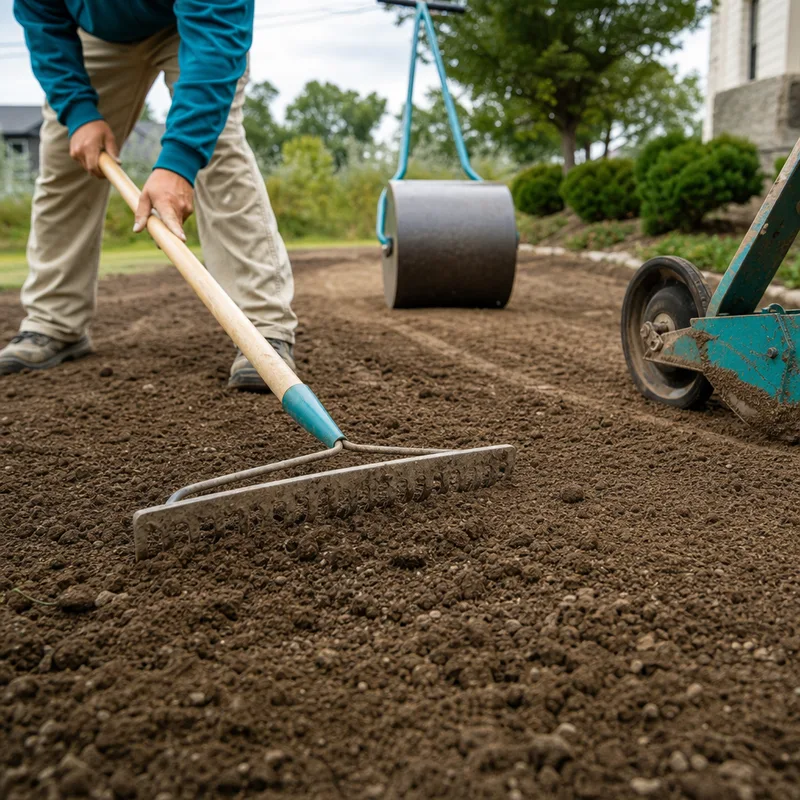
Sod can look perfect on install day and still fail if the base is wrong. Our prep work focuses on four things that decide whether turf roots down or dries out.
First, we set grade and surface drainage. Even small dips can hold water after rain and stress the turf. Second, we loosen and correct the topsoil zone so new roots can penetrate instead of hitting a hard layer. Third, we remove debris and smooth the surface so the sod sits flat with consistent soil contact. Fourth, we plan edges and transitions. A clean edge at sidewalks, driveways, and beds helps mowing and keeps the perimeter from drying out.
If you are comparing Pittsburgh sod providers, ask exactly how they handle grading and compaction. It is the difference between turf that knits together and turf that separates at seams or turns brown at high spots.
Homeowner priorities
Sod gives you a finished look right away, which is helpful for new construction, renovations, or homes going on the market.
On hillsides, sod can stabilize the surface faster than seed while roots establish, especially when heavy rain is in the forecast.
For side yards, pet runs, and paths between the house and garage, sod reduces the long muddy period you often get with seeding.
If prior seeding struggled because of washout, shade, or poor soil contact, sod can reset the lawn with a fresh, uniform surface.
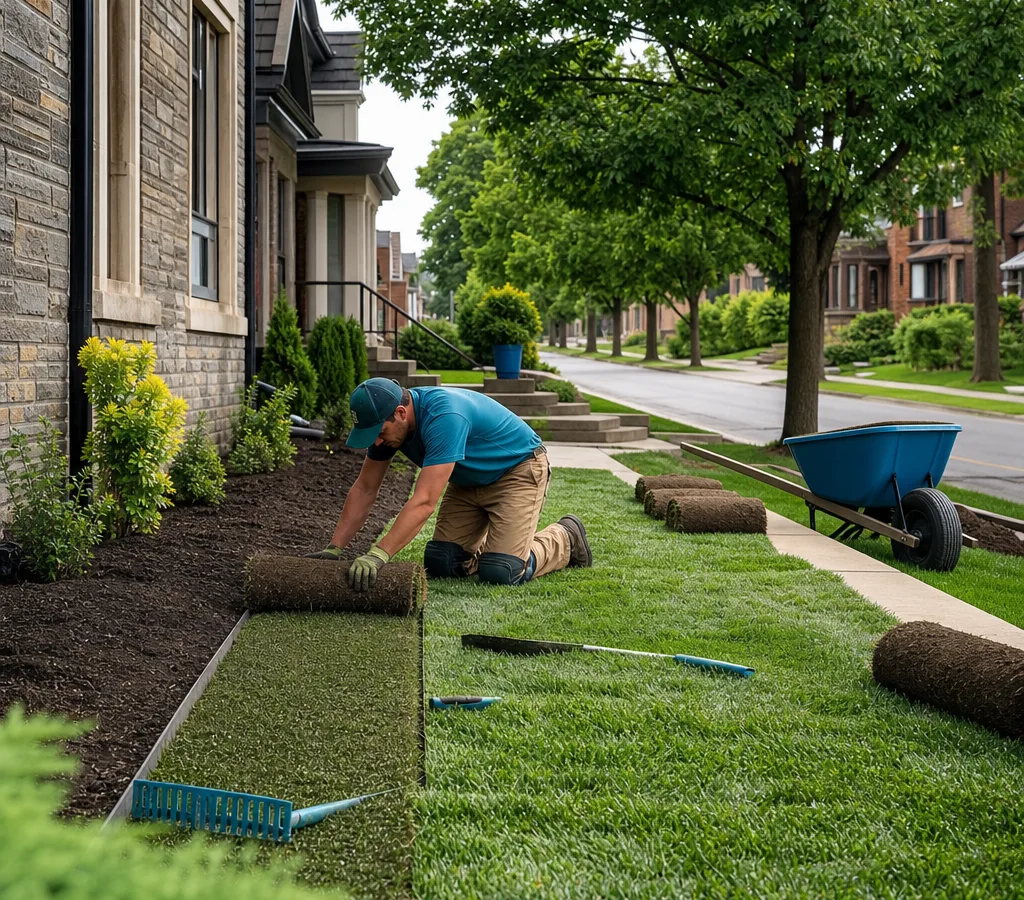
Sod allows tight lines around beds, patios, and sidewalks so the lawn reads as intentional and easy to maintain.
Installation process
We look at slope, sun and shade, existing soil condition, and how water moves across the yard. You get a clear scope for prep, installation, and first-week care.
We clear unwanted turf and debris as needed, rough grade and fine grade, and create a smooth, firm surface for full sod-to-soil contact.
Where the base is too hard, too rocky, or too thin, we correct it so roots have a workable zone. We also plan transitions at edges and hardscape.
We stagger seams like brickwork, keep joints tight, and avoid stretching pieces. Tight seams dry out less and knit together faster.
We roll the surface for contact, review watering and mowing timing, and confirm what to watch for during the rooting period.
Property-specific pricing
Sod installation in Pittsburgh typically ranges from about $2.00 to $5.00 per square foot installed, with small or complex yards sometimes higher because prep and mobilization take a similar amount of time. A straightforward 500 square foot area often lands around $1,000 to $2,500, while 1,500 square feet commonly runs $3,000 to $7,500+.
Your price depends on grading needs, removing old turf, bringing in topsoil, access to the yard, slope, and how many edges and cut-ins are required around beds, patios, or sidewalks. The exact cost is confirmed after an on-site visit to measure and review prep requirements.
Establishment guidance
New sod has shallow roots until it knits into the soil below. For the first week, consistent watering is the main job. The goal is to keep the sod and the top layer of soil damp, not flooded. Hot, windy days and sunny slopes dry faster than shaded backyards.
You can usually start mowing once the sod is rooted enough that corners do not lift when you gently tug. Keep the first few mowings conservative and avoid tight turns that can shear the new turf.
If you are still deciding between sod and seeding, hydroseeding in Pittsburgh can be a good fit for larger open areas where you can wait for germination and want a lower installed cost per square foot. This sod-focused service is for the situations where speed, erosion control, and instant uniform coverage are the priority.
Common questions
Sod can be installed through most of the growing season as long as the ground is workable, but mild temperatures make establishment easier. Spring and fall are popular because heat stress is lower and watering demands are more manageable, while summer installs can still do well with disciplined watering right after placement.
Plan to keep foot traffic light for about 2 to 3 weeks so the sod can root into the soil below. Brief, careful trips across the lawn are usually fine, but running, rough play, and repeated paths can pull seams apart before the turf is anchored.
In most sod Pittsburgh installs, yes, removing old turf—and addressing the soil underneath—gives the best root contact and reduces future settling. In limited cases, a thin existing lawn can be removed by grading and soil correction, but we prefer a clean base so the new sod lays flat and drains correctly.
Seams fail when pieces are not cut tight, the surface is uneven, or watering is inconsistent in the first week. Good practice is tight joints, staggered layout, rolling for contact, and extra attention to edges and high spots that dry fastest.
Yes, sod is often used on slopes because it provides immediate cover, but the base has to be graded and firm so pieces do not shift. On steeper areas, we may recommend additional stabilization steps and a watering plan that avoids runoff while still keeping the sod evenly damp.
The biggest help is clear access to the work area and a plan for watering right away after install. If you have sprinklers, we confirm zones and coverage; if not, we talk through hose and sprinkler placement so the entire sod area can be watered evenly during the establishment window.
Free property inspection
Tell us about your yard size, slope, and timeline. We will recommend the right sod approach, confirm prep needs, and provide a clear, written scope before work starts.