Paver and slab patios
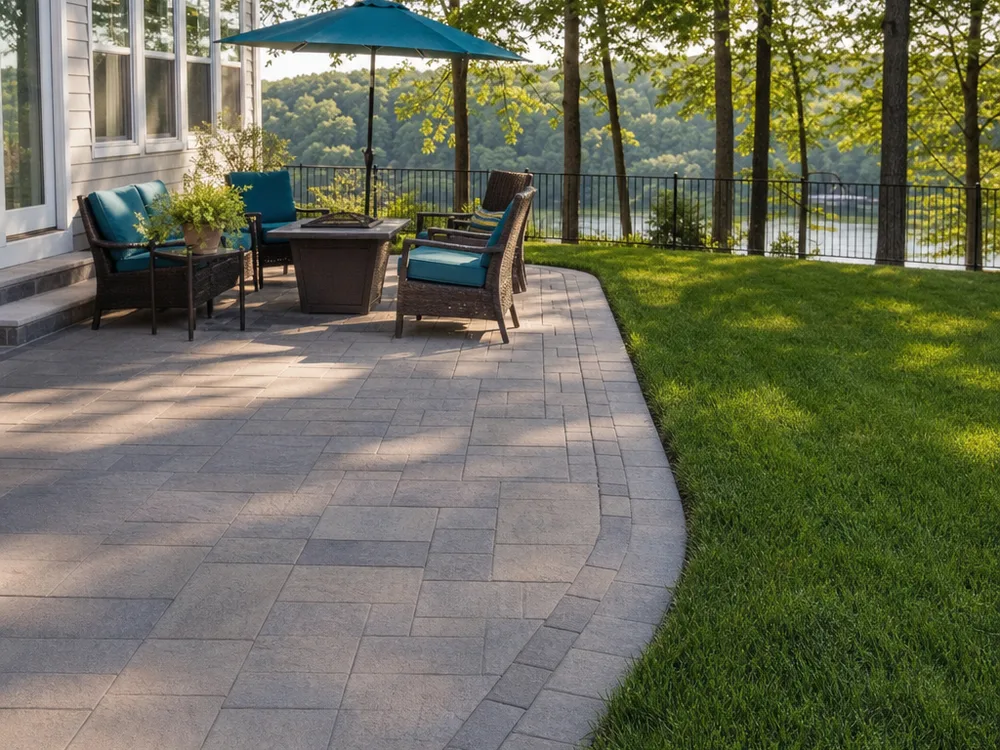
We install patios sized for how you actually use the space, with proper pitch away from the house and a base built to resist settling. Options can include soldier courses, borders, and transitions to lawns or planting beds.
Serving Pittsburgh, Pennsylvania & surrounding areas
Mon–Fri 8am–6pm · Sat 9am–2pm
Pittsburgh patios, walkways, walls & steps
Get a clean, durable outdoor space built for real use. We plan, grade, and install patios, walkways, steps, and retaining walls with drainage and freeze-thaw in mind, then leave the site tidy when the work is done.
Property-built hardscaping
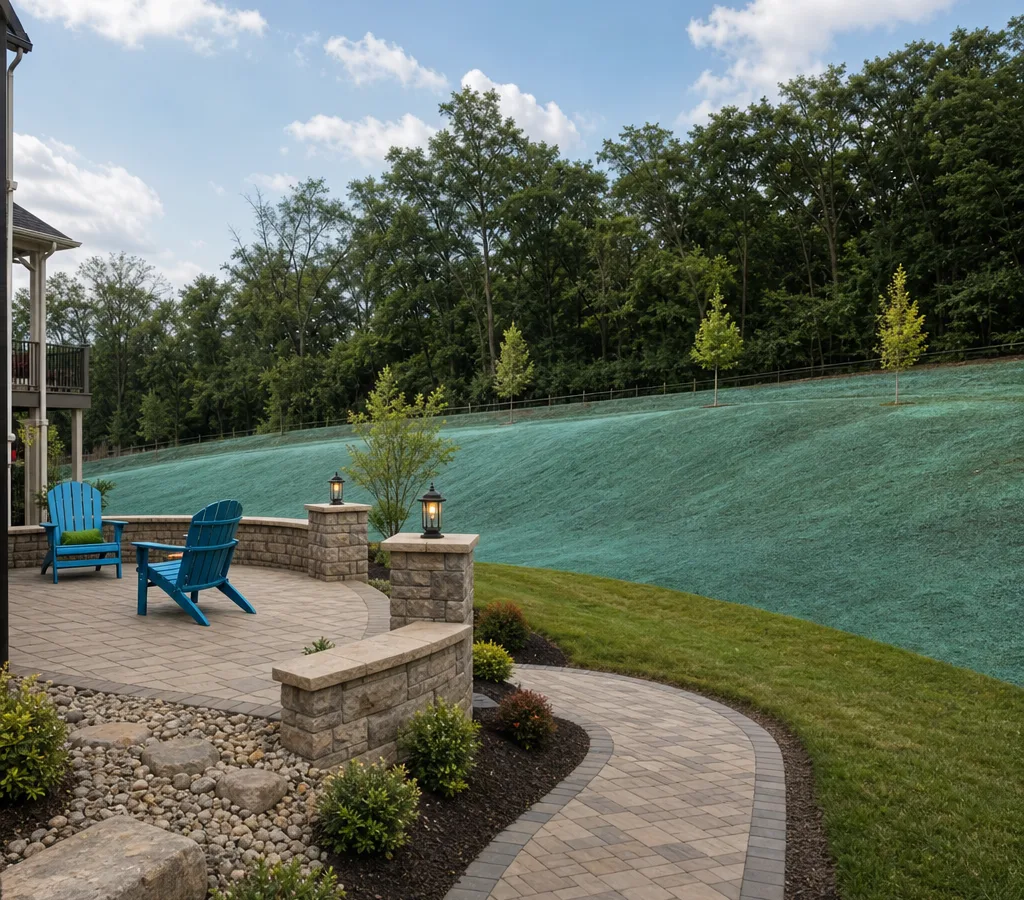
When people search for Pittsburgh hardscaping, they are usually trying to solve a practical problem: a sloped yard that is hard to use, muddy paths to a side door, a patio that heaves in winter, or an old wall that is starting to lean. Good hardscaping is less about a single product and more about correct base prep, proper pitch, and water control so the surface stays stable year after year.
Our team at Hyrdoseeding PA builds and repairs hardscapes across Pittsburgh, PA (15212). We handle the full scope, including layout, excavation, base and compaction, edge restraint, and cleanup. If you want a simple walkway or a full patio and wall package, you get a written scope and a clear plan before any work starts.
Hardscape work in and around Pittsburgh often means tight access, uneven grades, and weather that can punish shortcuts. That is why we focus on the parts you do not see when the project is finished: stable subgrade, the right aggregate base thickness for the site, and drainage details that keep water from sitting under pavers or behind a wall.
Included work & options
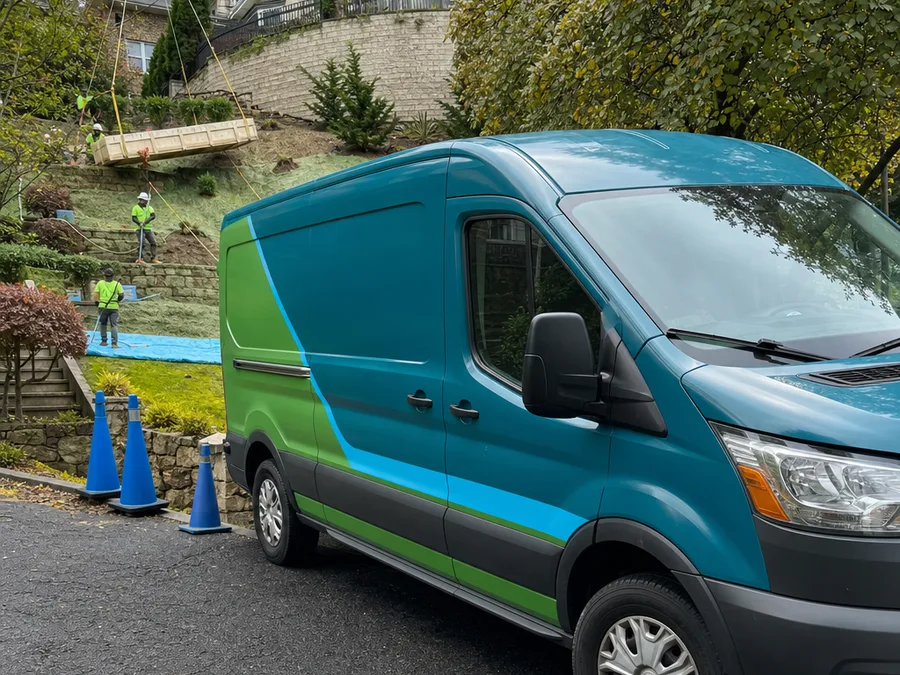
We install patios sized for how you actually use the space, with proper pitch away from the house and a base built to resist settling. Options can include soldier courses, borders, and transitions to lawns or planting beds.
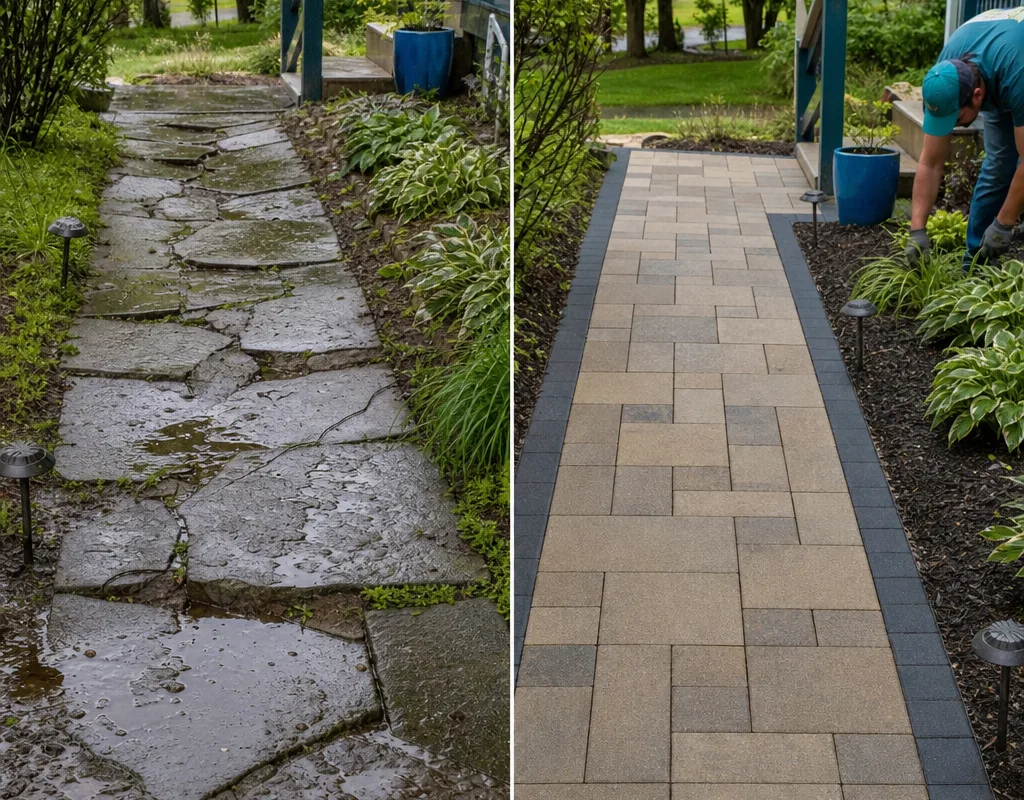
Front walks, side-yard access, and garden paths built for safe footing and good drainage. We pay attention to trip hazards, edge restraint, and tying into existing stoops, sidewalks, and driveways cleanly.
Walls that hold grade, create flatter areas, and define outdoor rooms. For retaining walls, we plan for base depth, backfill, and drainage so pressure does not build up behind the wall.
Steps are where small layout errors become daily annoyances. We build consistent step heights, stable landings, and durable edges so the approach feels natural and safe.
Sunken pavers, pooling water, cracked edges, or a walkway that shifted over time often needs targeted rebuild work, not a full replacement. We diagnose the base and drainage first.
Many hardscape failures start with trapped water. We look at downspout discharge, surface pitch, and where water naturally wants to go before we lock in elevations and materials.
Site preparation & results
A hardscape Pittsburgh homeowners enjoy long-term starts with measurements and a plan for water. In hilly areas like Mount Washington, steps and walls often need careful elevation control so the finished space feels level and stable. In flatter neighborhoods with older lots like Brookline, the challenge is often surface drainage and connecting to existing stoops, sidewalks, or alley access without creating puddles.
We typically start by walking the property and discussing how you want to use the space: seating, grilling, a path for trash bins, or a safer route to a back entry. Then we confirm elevations, identify problem runoff areas, and choose a build approach that fits. That may include adjusting grades, adding a swale or drain location where appropriate, and setting base depth based on soil condition and expected use.
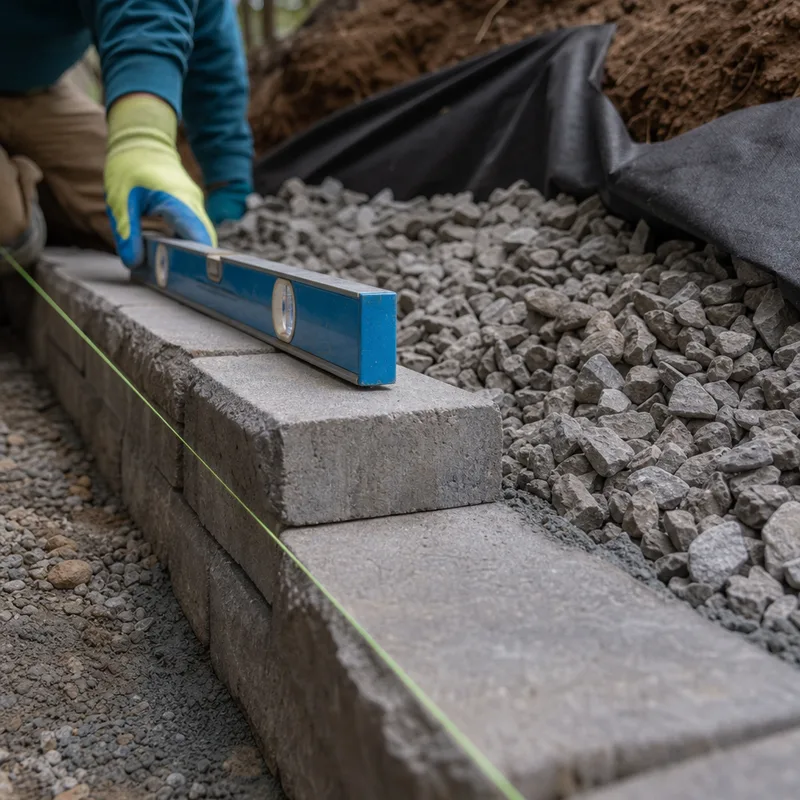
During installation, we focus on compaction in lifts, clean screed work, tight cuts, and solid edge restraint. For retaining walls, we account for base embedment and drainage aggregate behind the wall, because hydrostatic pressure is a common reason walls fail. The goal is straightforward: hardscaping Pittsburgh properties can rely on, with surfaces that drain, joints that stay tight, and transitions that do not become tripping points.
Service process
We review access, elevations, and drainage, then map out the footprint, edges, and transitions. You get a clear scope so you know what is included before work begins.
We excavate to the planned depth, address soft spots, and build a compacted aggregate base in lifts. This stage controls settling and helps prevent winter movement.
Pavers, slabs, coping, or wall units are installed to line and grade, with clean cuts where the hardscape meets existing structures. Edge restraint keeps pavers locked in place.
We finish joints as the material requires, dress surrounding grades so water sheds correctly, and leave the site orderly. You also get practical care notes for the first season.
Property-specific pricing
Most Pittsburgh hardscaping projects typically range from about $3,500 to $25,000+, depending on size and complexity. A simple paver walkway may land around $2,500 to $6,500, while a larger paver patio with steps or a small retaining wall is often $8,000 to $20,000+.
Your final price depends on square footage, material choice (pavers vs natural stone), excavation depth, access for hauling, grading changes, drainage needs, and whether an old patio or wall must be removed first. Exact costs are confirmed after an on-site evaluation and a written scope.
Finished-work details
Common questions
Most patio or walkway builds take 2 to 7 working days once construction starts, but schedule time depends on weather, access, and how much excavation and base work is needed. Projects that include retaining walls, multiple elevations, or complex cut patterns usually take longer. We confirm a realistic sequence after we have seen grades and soil conditions on site.
It depends on wall height, location, and what the wall supports, so the safest approach is to confirm requirements before construction. If a project triggers permitting or engineering, we can talk through what information the city typically asks for and plan the scope accordingly after the site evaluation.
Shifting or sinking is usually caused by base issues or water management issues: inadequate excavation depth, poor compaction, soft subgrade, or water sitting under the pavers and moving during freeze-thaw. Fixing it correctly often means lifting the affected area, rebuilding the base, and restoring pitch and edge restraint, not just re-leveling the surface.
Yes, sloped yards are often where hardscaping helps the most, but the design has to respect grade and drainage. Depending on the slope, the right answer may be steps with landings, a small retaining wall to create a level pad, or a terraced approach. We confirm elevations and propose an option that fits how you want to use the space.
The fix is usually a combination of correct pitch, controlled discharge from downspouts, and sometimes adding a drain or regrading adjacent areas. During the site visit we look at where water enters the area and where it can safely exit, then set finished elevations so water does not get trapped against the house or behind walls.
We can restore disturbed edges and final grades so the area transitions cleanly back to soil and lawn. If you also want a new lawn established after excavation and regrading, our Pittsburgh hydroseeding option can be a good fit for getting seed down quickly on fresh soil once the hardscape work is complete.
Free property inspection
Tell us what you want to build and what problems you are trying to solve (slope, settling, puddling, access). We will take measurements, review drainage and elevations, and provide a clear written scope for your Pittsburgh hardscaping project.